
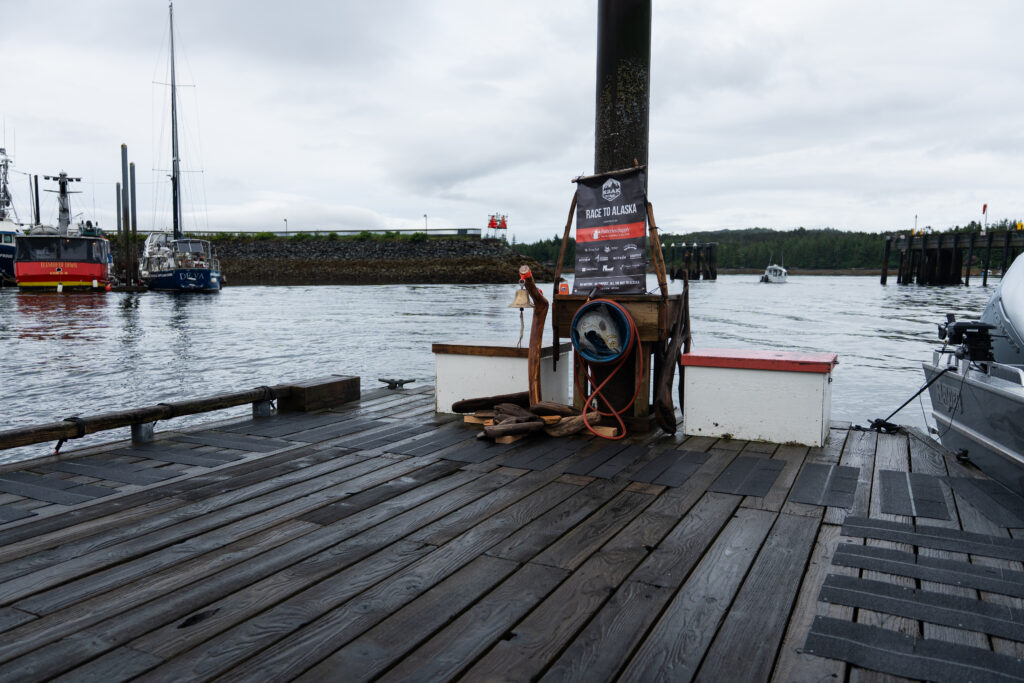
Yesterday we said Team Chiliwilliwa was about to finish, and then they did, which is a relief when you’ve committed to a prediction in public.
By hitting the dock, they collected the 20’ and under Sidebet put up by Small Craft Advisor Magazine and Turn Point Design: $1,000 and a pair of custom tactical sporks. It is a prize package that finally addresses the two primary anxieties of small-boat travel: financial solvency and how to consume lukewarm instant potatoes.
The reality is that two guys in an Angus Rowcruiser just dismantled the course using the most labor-intensive method available. Everything north of Bella Bella was a grind, but Grenville Channel was peak absurdity. Grenville is a fifty-mile ditch/wind tunnel set permanently to the wrong direction, backed by a current that recently won one of those face-slapping competitions.
Their tracker line through the channel looks like a zipper. They averaged roughly ten tacks per mile, retreating into whatever small crack in the rock wall passed for an anchorage every time the tide turned foul. They did this for two days.
The strange part is that Chilliwilliwa arrived in Ketchikan looking relatively fresh. Meanwhile, we’ve watched people step off relatively comfortable, twenty-five-foot sailboats looking as though they’ve aged a presidential term on the way up. Congratulations to Chiliwilliwa.
That was then, here’s now:
There are plenty of places to sleep along the Inside Passage, assuming you enjoy the feeling of being actively harvested. The south side of Dundas Island is one of those places, and that’s just where Team Old Farts dropped anchor last night. Dundas has a reputation for mosquitoes that don’t just bite; they have a three-year strategic plan and an organizational values statement. The local wisdom is that stopping there is pretty much like donating blood without a nice volunteer handing you a juice box.
The Old Farts survived the brief, grey smudge that passes for night at this latitude and are back in motion. They’ve been grinding out about 50 miles a day, putting Ketchikan within reach sometime tonight, provided the wind, the tide, the boat, and their joints maintain their current labor agreement. Skipper Darrell Gray is familiar with the R2AK tracker, having previously watched it from the psychological basement reserved for race parents when his daughter Willow finished in under eight days with Team Juvenile Delinquents in 2024. Darrell and the Old Farts are on track to take roughly twice that long, proving that age and experience don’t answer the question of how to move faster, but they do teach you how to get the absolute maximum out of your registration fee.
After Old Farts, seven teams remain. Team Rainy and Team Let’s Wing It have been paddling together since nearly the beginning, and by now the fact that they are separate teams is largely administrative. They continue to put in huge days and make strong progress north. Barring calamity, both look good to reach Ketchikan in the next couple of days, the question being: will they race each other for the last 100 yards or go for a perfect tie?
Farther south, Belly Full of Tea and Apple Bottom Boy (Belly Boy Full of Tea Apples?) are about 10 to 15 miles ahead of Teams Lillian Signed Up to Suffer and Notes. Team The Bristol Bear called it a race Friday morning and turned toward home, happy with the effort and hoping to return to kids who still recognize him. And a proper scone, probably.
Those four, plus the mysterious Laughing Roomba are still dragging themselves north, while the Grim Sweeper follows like an indifferent eraser. The Grim passed Telegraph Cove around noon Friday. The teams ahead of it are still paying off the debt from the northerly that pinned them down at Cape Caution for three days. Since escaping that particular trap, their routine has become: paddle/row, insert calories directly into the face, paddle/row more, and ignore the complaints coming from their shoulders.
At noon today, 144 hours remain until the Grim reaches Ketchikan. This makes finishing for the human-powered rear guard as much a math problem as one that involves ibuprofen rationing.
The minimum is about 38 nautical miles every calendar day, but calendar days contain sleep, food, weather, current, fatigue, and the need to find a piece of coast that will allow a human being to get out of a kayak without mountaineering equipment. To leave any margin for the coast having opinions, the real target is probably closer to 40 or 45 miles a day.
The math works, but it requires perfection from bodies currently held together by athletic tape and momentum. The Sweeper covers 75 miles every time the earth rotates. Every hour spent waiting for a tide or fixing something is margin leaking out of the bucket. The finish line hasn’t moved, but the room between the racers and the exit is shrinking by roughly 30 miles a day.
Header Photo by: Garret Weintrob